
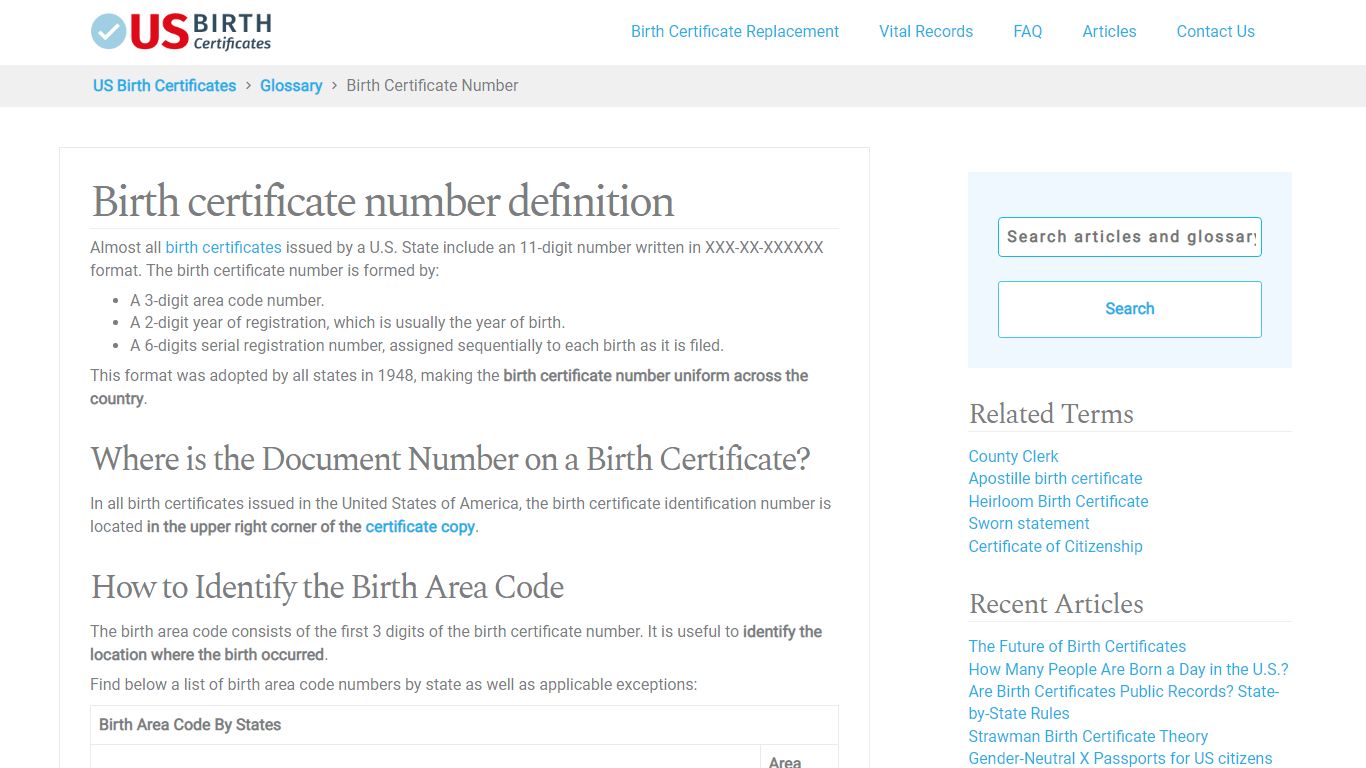
Registered Number On Birth Certificate is an 11-digit code every U.S. state uses to track and file birth records. This number follows the format XXX-XX-XXXXXX. The first three digits show the county or health district. The next two digits are the year the birth was recorded. The last six digits are a unique serial number given in order by the state’s vital records office. This number appears on the official birth certificate. It helps hospitals, government offices, and families find the correct record fast. For example, a baby born in Los Angeles County in 2022 might have a number like 037-22-123456. The “037” is the county code, “22” is the year, and “123456” is the file number.
What Is a Registered Number on a Birth Certificate?
The registered number is the main ID for a birth record in the United States. Each state gives one to every birth certificate. It is not the same as a Social Security number. It is used only for vital records. The number helps clerks and agencies pull the right file from millions of records. It also stops mix-ups when names or birth dates are similar. The number is printed on the first page of the certificate. It is often near the top, under the state seal. Some states put it in a box or bold text so it stands out. This makes it easy to find when someone needs a copy for school, work, or travel.
How Is the Registered Number Assigned?
States assign the registered number when a birth is reported to the vital records office. Hospitals or midwives send the birth report to the state. The state then adds it to the database and gives it a number. The first three digits come from a list of county or district codes. Each area has its own code. The next two digits are the year. Most of the time, this matches the birth year. But if the birth is reported late, the year might be different. The last six digits go in order. The first baby filed that year gets 000001. The second gets 000002. This continues all year. When the year ends, the count resets to 000001. This system keeps records organized and easy to find.
Where Is the Registered Number Located?
The registered number is usually in the upper-right corner of the birth certificate. It sits below the state seal and above the signature lines. In some states, like New York, it is in the upper-left corner. Others place it in a shaded box near the bottom. The label says “Registration Number” or “File Number.” This helps clerks find it fast when processing requests. The number is always 11 digits. It may have spaces or hyphens, like 123 45 678901 or 123-45-678901. The format is the same across the country. But the location can vary by state. Always look near the top or bottom of the first page.
Why Is the Registered Number Important?
The registered number is key for legal and government tasks. It is needed when applying for a passport, driver’s license, or Social Security card. Schools and jobs may ask for it during background checks. It also helps prove identity when a person is born in one state but lives in another. Without this number, it can take longer to get certified copies. Some online systems use it to verify records. For example, when ordering a birth certificate online, you enter the number and date of birth. The system checks the match and sends the correct file. This keeps personal data safe and stops fraud.
Can You Find the Registered Number Online?
Most states do not show the full registered number online for privacy. But you can use it to look up your own record. Go to your state’s vital records website. Enter the 11-digit number and your exact date of birth. Some sites also ask a simple math question to stop bots. If the info matches, the system shows your name, birth place, and parents’ names. This proves the number is correct. You cannot search by name alone in most states. The number is required to protect privacy. Older records may not be online. In those cases, you must contact the vital records office by mail or phone.
What If Your Birth Certificate Has No Registered Number?
Some older birth certificates do not have a registered number. This was common before the 1970s. States used different filing systems back then. The number might be on a separate abstract or only on certified copies. If you need the number for a form, contact your state’s vital records office. Give them your full name, date of birth, and parents’ names. They can look up the file and give you the number. You may need to pay a small fee. Once you have it, you can use it for licenses, passports, or other needs. Updating your certificate with the number can save time later.
Are Registered Numbers and Birth Certificate Numbers the Same?
Yes, in most cases. The terms “registered number” and “birth certificate number” mean the same thing. Both refer to the 11-digit code on the certificate. Some states use one term, others use the other. But the function is identical. It links the paper to the state’s database. For example, Barack Obama’s Hawaii birth certificate has the number 151 61 10641. Here, “151” is the county code, “61” is 1961, and “10641” is the file number. Whether it is called a registration number or file number, it does the same job. It helps find the record quickly and safely.
How to Use the Registered Number When Ordering a Copy
When you order a certified copy of your birth certificate, you will need the registered number. Most state websites ask for it during the online form. You also need your full name, date of birth, and parents’ names. Some states require a photo ID. The number helps the office find your file fast. Without it, the search takes longer. If you do not know the number, look at your current certificate. If you lost it, call the vital records office. They can help you find it using your personal details. Once you have it, keep it in a safe place. You may need it again for school, work, or travel.
State-by-State Differences in Registered Numbers
While the format is the same, each state has its own rules. County codes differ by state. For example, Los Angeles County is 037 in California. But in Texas, Harris County might be 201. The year code is usually two digits. A few states use four digits, like 2022 instead of 22. The serial number resets each year. Some states start at 000001. Others may skip numbers or use gaps. The placement on the certificate also varies. Most put it in the upper-right. New York uses the upper-left. Florida puts it in a box at the bottom. Always check your state’s sample image to know where to look.
Registered Number vs. Certificate Number: Is There a Difference?
No, there is no real difference. Some people say “certificate number” and others say “registered number.” Both mean the 11-digit code. The term used depends on the state. California calls it a “Registration Number.” Texas uses “File Number.” New York says “Certificate Number.” But all serve the same purpose. They are the unique ID for the birth record. Do not confuse this with the document number on a certified copy. That is a different code used for tracking orders. The registered number is part of the original birth record, not the copy.
How to Protect Your Registered Number
The registered number is sensitive information. Do not share it online or on social media. Only give it to trusted agencies when needed. When filling out forms, check that the site is secure. Look for “https” in the web address. Never email the number unless the site says it is safe. Keep your birth certificate in a locked box or safe. If you lose it, report it to the vital records office. They can flag the file to prevent fraud. Using the number wisely helps protect your identity.
Common Mistakes When Reading the Registered Number
People often mix up the registered number with other codes. Do not confuse it with the Social Security number. That is a 9-digit number on a different card. Also, do not use the document number from a certified copy. That is for tracking, not the birth record. Another mistake is reading the year wrong. The two digits are the registration year, not always the birth year. If a baby is born in December but registered in January, the year code will be the next year. Always double-check the format: three digits, two digits, six digits. Count them to be sure.
How the Registered Number Helps in Legal Cases
Lawyers and courts use the registered number to find birth records fast. In custody cases, name changes, or immigration, the number proves identity. It stops fraud by linking the person to the official record. Police also use it during background checks. Hospitals use it to update medical files. The number makes sure everyone is talking about the same person. Without it, mistakes can happen. That is why it is required on many legal forms.
Registered Number and International Use
In the U.S., the registered number is standard. But other countries use different systems. Some use a national ID number. Others have no number at all. When traveling abroad, you may need a certified copy with a seal. The registered number helps U.S. agencies verify the document. For visas or school, foreign offices may ask for the number. Keep it handy when applying. It shows the record is real and official.
How to Correct a Registered Number
If the registered number is wrong on your certificate, contact the vital records office. You will need to file an amendment. Bring proof like a hospital record or affidavit. The office will check the error and fix it. This may take weeks. Once done, you get a new certified copy with the correct number. Do not try to change it yourself. That is illegal and can cause problems with licenses or passports.
Registered Number in Digital Records
Many states now store birth records online. The registered number is part of the digital file. When you log in to your state’s portal, you can view or download a PDF. The number appears on the digital copy just like the paper one. This makes it easy to access from home. But the number is still needed to log in or verify identity. Digital records are not public. Only you or authorized people can see them.
Registered Number and Genealogy Research
Family historians use the registered number to find old birth records. Some states let you search by number in their archives. This helps when names are misspelled or dates are unknown. The number leads directly to the right file. It saves time compared to searching by name. Many genealogy sites link to state vital records. Having the number makes research faster and more accurate.
Registered Number and Adoption Records
In adoption cases, the registered number can be sensitive. Original birth certificates may be sealed. The adopted child gets a new certificate with a new number. The old number is kept in a secure file. Only courts or authorized agencies can access it. If you are adopted and need your original number, contact the court or vital records office. Laws vary by state. Some allow access at age 18. Others require a court order.
Registered Number and Name Changes
If you change your name, the registered number stays the same. It is tied to the birth record, not the name. The new name appears on updated certificates. But the number does not change. This keeps the record consistent. When you apply for a new ID or passport, use the same number. It proves you are the same person.
Registered Number and Death Records
When a person dies, the registered number is used to link the birth and death records. This helps with family history and legal matters. The number appears on the death certificate in some states. It shows the full life record. This is important for estates, benefits, and genealogy.
Registered Number and Military Records
The military uses the registered number to verify birth details. It is part of the enlistment process. Recruits must provide their birth certificate number. This ensures they are who they say they are. It also helps with benefits and records later. Keep your number safe during service.
Registered Number and School Enrollment
Schools ask for the registered number to prove age and identity. It is part of the enrollment form. The number helps avoid duplicates or fraud. It also links to health records. Parents should provide the number when registering a child. It is usually on file with the school district.
Registered Number and Healthcare
Hospitals use the registered number to update medical records. It ensures the right patient gets the right care. When you move or change doctors, the number helps transfer files. It is also used in insurance claims. Having the number makes healthcare smoother and safer.
Registered Number and Voting
To register to vote, you need to prove your identity and age. The registered number on your birth certificate is one way to do this. It shows you are a U.S. citizen and old enough to vote. Keep your certificate safe. You may need it again during elections.
Registered Number and Taxes
The IRS does not use the registered number. But you may need it to get a Taxpayer Identification Number (TIN) if you do not have a Social Security number. The number proves your identity. It is part of the application process. Keep it with your tax documents.
Registered Number and Immigration
Immigration officers use the registered number to check birth records. It is part of visa and green card applications. The number proves you were born in the U.S. or to U.S. parents. It helps avoid fraud. Always provide the correct number when applying.
Registered Number and Dual Citizenship
If you have dual citizenship, the registered number is still your U.S. ID. It does not change if you get another passport. Use it for U.S. forms and records. It proves your American birth right.
Registered Number and Social Media
Never post your registered number on social media. It can be used for identity theft. Scammers may use it to open accounts or get benefits. Keep it private. Only share it with trusted offices.
Registered Number and Lost Certificates
If you lose your birth certificate, use the registered number to order a new one. It speeds up the process. Without it, the search takes longer. Call your state’s vital records office for help. They can guide you through the steps.
Registered Number and Fraud Prevention
The registered number helps stop fake birth certificates. Each number is unique. Clerks can check it against the state database. If it does not match, the document is rejected. This protects everyone’s identity.
Registered Number and Technology
New systems use the registered number for digital IDs. Some states are testing apps that store your birth record. The number is encrypted for safety. This could make paperwork faster in the future.
Registered Number and Privacy Laws
Privacy laws protect your registered number. States limit who can see it. Only you, family, or authorized agencies can access it. This follows federal and state rules. It keeps your data safe.
Registered Number and Future Changes
States may update the format in the future. But the 11-digit system is likely to stay. It works well for millions of records. Any changes will be announced by vital records offices.
Related Search Terms
- Kennebec County Jail Roster
- Kosciusko County Court Records
- Green Card Number Location
- Government To Online Safety Laws Speed
- Wagov Courts
- Columbus Mugshots
Frequently Asked Questions
Many people have questions about the registered number on a birth certificate. Below are the most common ones. Each answer gives clear, helpful information based on U.S. vital records rules. If you need more help, contact your state’s office.
Can I change my registered number?
No, you cannot change your registered number. It is assigned by the state when your birth is recorded. It stays the same for life. Even if you move, change your name, or get a new certificate, the number does not change. It is part of your permanent record. If you think the number is wrong, contact the vital records office. They can check and fix errors. But you cannot pick a new number. It is like a fingerprint for your birth file. Keep it safe and use it when needed for official forms.
Is the registered number the same as a Social Security number?
No, the registered number is not the same as a Social Security number. The registered number is 11 digits and is on your birth certificate. It is used to find your birth record. The Social Security number is 9 digits and is on your Social Security card. It is used for work, taxes, and benefits. They serve different purposes. Do not mix them up. Both are important, but only the registered number is on the birth certificate. Keep both numbers private to protect your identity.
What if I don’t know my registered number?
If you don’t know your registered number, look at your birth certificate. It is usually in the upper-right corner. If you lost the certificate, contact your state’s vital records office. Give them your full name, date of birth, and parents’ names. They can look it up and tell you the number. You may need to pay a fee. Once you have it, write it down and keep it safe. You will need it for passports, licenses, and other official tasks.
Can someone else use my registered number?
No, someone else should not use your registered number. It is tied to your birth record. Using it for fraud is illegal. Only you or authorized people, like parents or lawyers, can use it for legal purposes. If you suspect someone is using your number, report it to the vital records office. They can flag your file and stop misuse. Protect your number like you protect your Social Security number.
Does every U.S. birth certificate have a registered number?
Most do, but not all. Certificates issued before the 1970s may not have one. States used different systems back then. If your certificate lacks a number, contact the vital records office. They can provide it based on your name and birth details. Newer certificates always have the number. It is now standard across the U.S.
Can I look up someone else’s registered number?
No, you cannot look up someone else’s registered number without permission. It is private information. Only the person, their parents, or authorized agencies can access it. States protect this data to prevent identity theft. If you need a record for legal reasons, like adoption or court, get a court order. Do not try to search online. Most states do not allow public searches by number.
How do I verify a registered number is real?
To verify a registered number, go to your state’s vital records website. Enter the 11-digit number and the person’s date of birth. The system will check if it matches. If it does, it shows basic details like name and birth place. This proves the number is real. Do not use third-party sites. Only use official state portals. This keeps your data safe and accurate.
For more information, contact your state’s vital records office. Visit their official website or call their customer service line. Hours are usually Monday to Friday, 8 a.m. to 5 p.m. local time. Some offices have walk-in services. Others require appointments. Fees vary by state. Keep your registered number safe. It is a key part of your identity.